

Most of the businesses we work with in Montana are not bad at marketing. They are just busy. And when you are busy, marketing has a way of running on autopilot for a while before anyone notices it has drifted somewhere unhelpful.
Nobody plans to waste marketing budget. It happens in the gaps between the last conversation you had about strategy and the moment someone thinks to look at what is actually going on. Which, in a lot of small businesses, can be quite a while.
We look at this stuff every day across the clients we work with, so we have a pretty clear picture of where the budget drift tends to live. Some of it is obvious once you know where to look. Some of it hides in places that look completely fine on the surface. Either way, spotting it is a big part of what we do, and we figured it was worth sharing what we actually see.
The Usual Suspects of Mismanaged Marketing Budget
Ads running to the wrong people
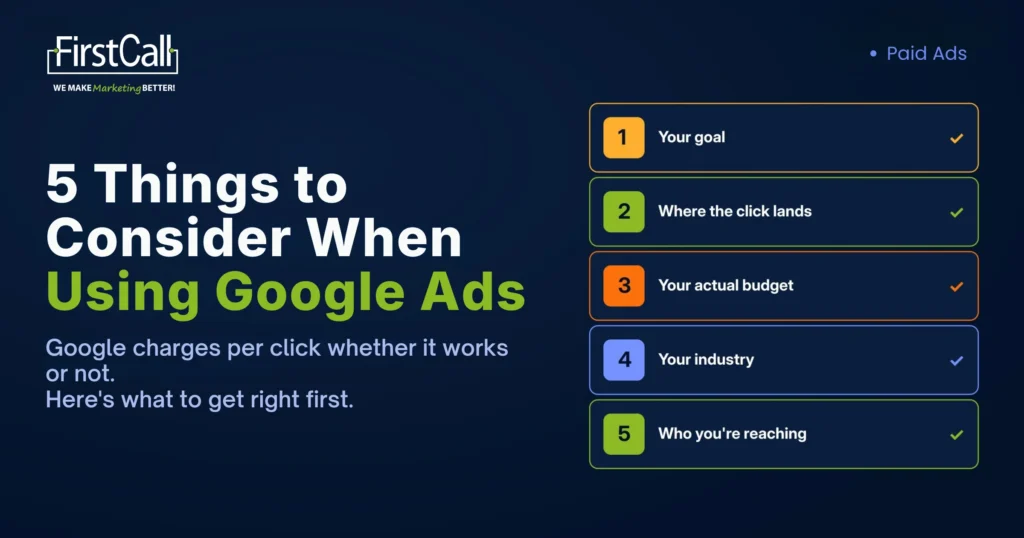
Paid ads are probably the fastest way to burn budget without realizing it. Audiences get stale. Geographic settings get left on defaults. A campaign that made perfect sense six months ago keeps spending money on clicks from people who were never going to become customers.
We check this regularly across the paid ads we manage. The fix is rarely dramatic. Usually it is tightening the audience or pausing something that stopped pulling its weight. Small adjustments, real savings.
Content that exists but does not do anything
This one is surprisingly common. A business invests in content creation, gets a run of blogs or social posts done, and then the content just sits there. Content that has no distribution plan and no connection to search intent tends to just sit there accumulating nothing. We pay attention to whether the content we produce for clients is working, which means showing up in search, driving traffic, and giving people a reason to take the next step.
Email that goes out but not in
Email is one of the highest return channels available to a small business. It is also one of the most neglected once it is set up. Open rates drop. Subject lines stop getting refreshed. The same sequence that ran fine two years ago keeps running because nobody has had a reason to revisit it.
We look at email marketing performance across our clients regularly. When open rates start sliding, that is a signal worth acting on before the list goes cold altogether.
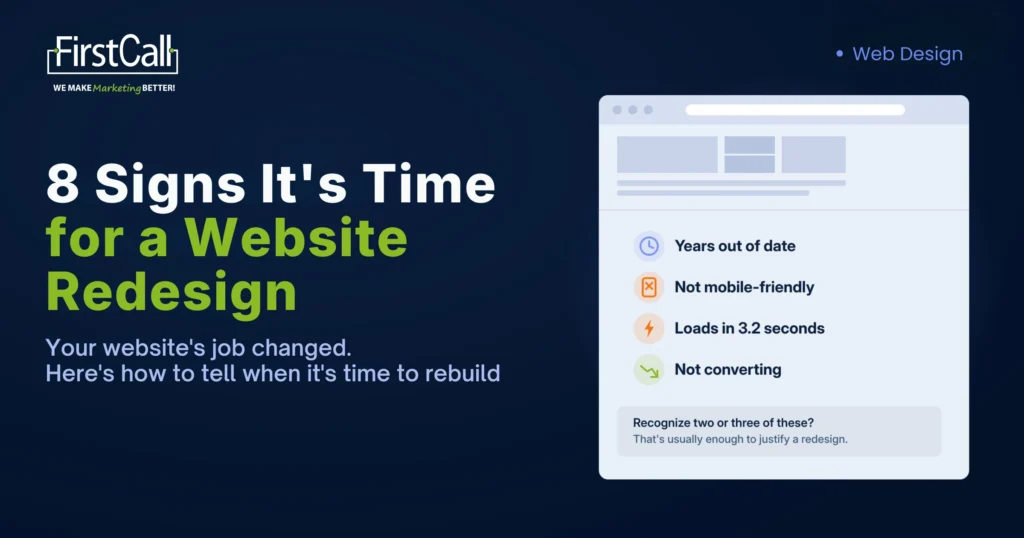
A website that quietly stopped converting
Websites do not break loudly. They just gradually stop performing and nobody notices because the site still looks fine. A page that used to convert well picks up a slow load time after a plugin update. A contact form stops working after a theme change. A mobile layout shifts in a way that makes the phone number impossible to tap.
We treat web design and development as an ongoing responsibility rather than a one-time project, which means we catch these things before they have been costing you for three months without anyone noticing.
SEO that was set up and then left alone
Search engine optimization is not a thing you do once. Keywords shift. Competitors move. Algorithm updates change what Google rewards. An SEO strategy that was solid eighteen months ago may have slipped in ways that are not obvious from the outside but are very visible in the traffic data.
This is one of the areas where having someone watching regularly makes the biggest difference. By the time most businesses notice an SEO problem, it has been building for a while.
How Much Should a Business Spend on Marketing?
This is usually the point where business owners ask the same question.
“Okay. So what should we actually be spending?”
The frustrating answer is that there is not one number that fits everybody. A contractor in Bozeman is not operating with the same margins, sales cycle, or customer behavior as a medical clinic in Billings or a restaurant in Missoula.
That said, there are ranges that tend to make sense.
Most established small businesses land somewhere between 5% and 12% of annual revenue toward overall marketing. Businesses trying to grow aggressively, enter a new market, or recover from a slow period often push higher for a while.
A few examples we commonly see:
- Contractors and home services businesses often sit around 5% to 8%, with a heavier focus on Google Search, Local SEO, and lead generation.
- Restaurants and hospitality businesses usually spend more consistently on visibility and repeat traffic. Social media, photography, seasonal campaigns, and review management tend to matter more there.
- Healthcare and professional services businesses often invest steadily in trust-building. Website clarity, reputation management, search visibility, and patient or client education usually outperform flashy campaigns.
- Retail businesses can swing widely depending on inventory cycles, tourism traffic, and seasonality. A shop in downtown Bozeman during summer has different pressures than one in a smaller market year-round.
The bigger issue is usually not that businesses are spending too little. It is that the budget got scattered.
A little toward boosted posts. A little toward Google Ads. A website update that never got finished. Somebody’s cousin handling social media for a few months. A campaign that stayed live long after anyone checked the results.
Over time, the marketing budget starts behaving more like a collection of separate expenses than an actual strategy.
How Much Should Go Toward Individual Marketing Campaigns?
This is where things tend to get murkier for business owners.
A business might technically be spending enough overall, but the allocation underneath it is pulling against itself.
We see this a lot with Montana businesses that have been around a while. They added marketing piece by piece over the years, usually for good reasons at the time. Nobody ever stopped to evaluate whether those pieces still fit together.
A healthy marketing budget usually has a few characteristics:
- The majority of spending supports channels that directly produce leads, calls, bookings, or sales.
- Brand awareness efforts support the main revenue channels instead of competing with them.
- Campaigns have a defined purpose before money gets attached to them.
- Underperforming campaigns get adjusted or paused instead of continuing for another year.
For many local businesses, the website and Google visibility still carry the most weight. If those foundations are weak, it becomes very expensive to compensate with ads alone.
That is part of why businesses often feel frustrated with marketing. They are spending money consistently, but they cannot clearly see which parts are working and which parts are just absorbing budget.
After a while, every new marketing decision starts feeling risky.
Why Marketing Budgets Drift Over Time
Nobody wakes up one morning and decides to waste marketing money.
The business gets busy. Priorities shift. Campaigns stay running because nobody has time to revisit them. Reporting gets complicated enough that people stop looking closely. Different vendors focus on their own piece without anyone looking at the whole picture.
Then six months later, the marketing budget no longer reflects what the business actually needs.
That is the real pain point for most business owners.
It is not confusion about one campaign.
It is the feeling that the entire system has become hard to evaluate confidently.
You know money is going out every month. You suspect some of it is working. You suspect some of it is not. You do not have a clear way to separate the two.
That uncertainty is exhausting, especially for businesses already juggling staffing, operations, scheduling, inventory, and everything else that comes with running a company.
What To Do If Your Marketing Budget Feels Scattered
Usually the next step is not “spend more.”
It is figuring out whether the current budget is actually pointed at the right things.
That is exactly what we do during a MarketingStack Challenge.
We look at where your marketing dollars are currently going, how the different pieces are performing together, and where the disconnects are happening. Sometimes the answer is reallocating budget. Sometimes it is simplifying. Sometimes it is realizing one channel is carrying far more weight than expected.
Most businesses leave with a much clearer picture of what is happening, even if they decide not to work with us afterward.
If your marketing budget feels harder to trust than it should, that is usually worth a conversation.