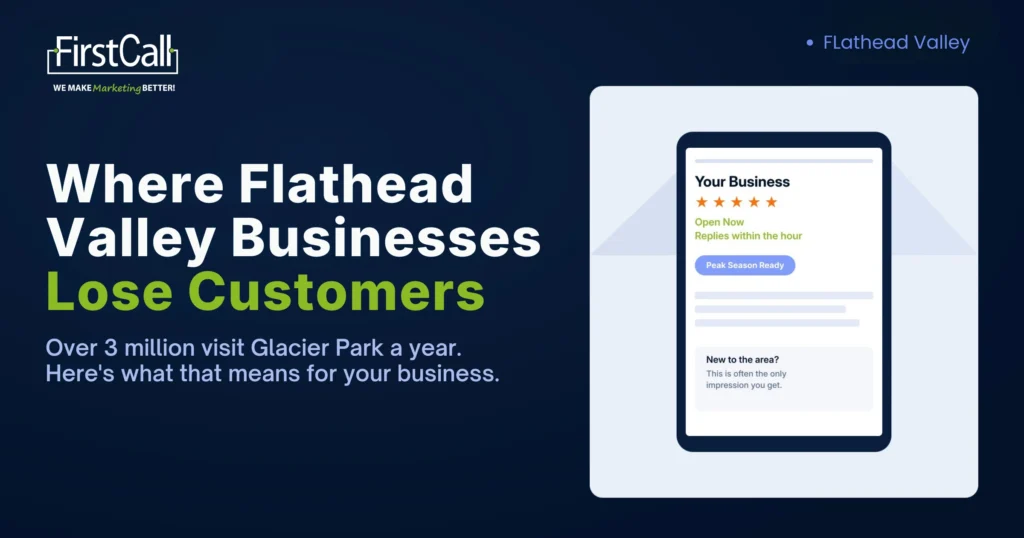

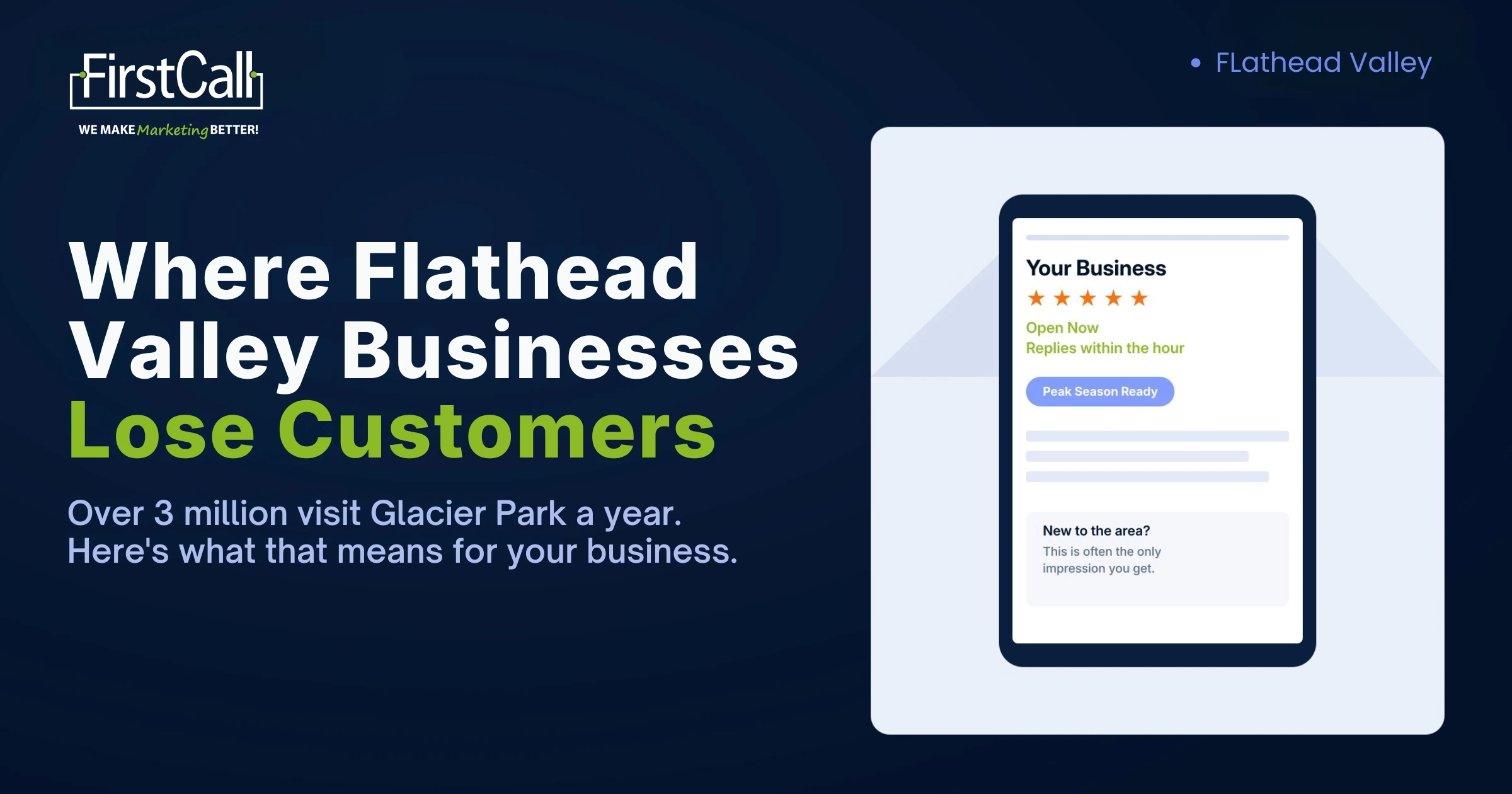
I keep coming back to one number when I think about marketing anywhere near Glacier Park: over three million people came through the park’s gates in 2025, and their spending pumped an estimated $656 million into the local Flathead economy the year before, according to National Park Service data. If you run a business in Kalispell, Whitefish, Bigfork, or Columbia Falls, a huge share of your potential customers are people who have never heard of you before this week.
That changes the marketing math. In Missoula, a lot of customer trust gets built over years, neighbors who already know your name. In the Flathead Valley, you’re constantly earning trust from scratch, from someone standing in a parking lot with spotty cell service, trying to decide which plumber, restaurant, or outfitter to call in the next thirty seconds.
Why does the Flathead Valley play by different rules?
Most marketing advice assumes a mostly local, repeat customer base. That’s not the Flathead. Summer traffic swings the population dramatically, and a meaningful share of the people searching for a business here are doing it for the first and only time, with no history to fall back on and no friend to ask for a recommendation.
That means the signals a stranger can check in ten seconds, your Google Business Profile, your reviews, whether anyone answers the phone, carry more weight here than almost anywhere else in Montana I’ve worked in. A local might give a business the benefit of the doubt, but a visitor from out of state, comparing three options on their phone outside Glacier’s West Entrance, is working from nothing except what’s in front of them right now.
The Google Business Profile problem is worse here, not better
Businesses across Montana let their Google Business Profiles go stale, but in a tourist-heavy market the cost is higher. Wrong hours during peak season turn away someone who is only in town for two days and won’t get a second chance to visit. Photos from three years ago don’t show what the storefront, menu, or inventory actually look like today, and a visitor has no other way to check.
I tell every Flathead client the same thing: keeping your profile current isn’t a nice-to-have here. It’s the difference between showing up correctly for someone who is standing nearby right now with money to spend and losing them to whichever competitor’s listing looks more current.
Reviews carry the weight that word of mouth would carry elsewhere
In a market with less repeat business, reviews do the job that a neighbor’s recommendation would do in a smaller, more settled town. A visitor reads your five most recent reviews, not your best ones from two years ago, and decides in seconds whether you’re worth the drive.
This cuts both ways. A string of recent, specific, positive reviews reads as proof the business is still good today. A gap of several months since your last review reads as a question mark, even if nothing is actually wrong. Asking happy customers for a review right after a good visit is one of the lowest-effort, highest-return habits a Flathead business can build, especially heading into peak season.
Response speed matters even more when the customer is only in town briefly
A slow reply costs every business customers, but it costs a Flathead business more, because a visitor who doesn’t hear back today may already be checked out of their hotel and headed to Yellowstone tomorrow. There’s no next week to catch them in. If your business handles a lot of seasonal or one-time inquiries, whoever replies first usually wins the booking, not whoever eventually sends the most thorough answer.
Does this apply the same way to every kind of business here?
Not quite. Hospitality, outfitters, and anything tourism-adjacent live and die on the dynamics above, since most of their customers are exactly the first-time, deciding-in-seconds visitor this piece describes. Home services and healthcare lean more on the local, repeat-customer side of the market, closer to how I’ve seen Missoula behave, though even those businesses see a real seasonal bump from the valley’s growing year-round population. Professional services sit in between, since referrals still matter, but an outdated Google presence still quietly costs them the customers who search rather than ask around.
Where should a Flathead Valley business actually start?
If you only have an hour this week, I’d spend it on your Google Business Profile. Update the hours, add a few current photos, and reply to whatever reviews are sitting there unanswered. It’s the single highest-leverage fix available, because it’s often the very first thing a stranger sees before they ever decide to walk in.
From there, a steady habit beats a single big push: ask for reviews after good visits, and build a simple system so inquiries get a same-day reply even during the busiest weeks of summer. Our digital marketing services for Kalispell and the surrounding Flathead Valley are built around exactly this kind of market, one where a huge share of your customers are meeting you for the first time and deciding fast.
Not sure where your own business actually stands?
That’s what our free MarketingStack Challenge is built to find, and it works the same way whether you’re in Kalispell, Whitefish, or anywhere else in the valley.
Quick answers
Why does Google Business Profile matter more in the Flathead Valley than elsewhere? Because a large share of customers here are first-time visitors with no local knowledge to fall back on. Your profile is often the only source of truth they have, so outdated hours or old photos cost you customers who have no way to know better.
How often should a Flathead Valley business ask for reviews? Continuously, not just occasionally. Recent reviews matter more than total review count here, since a visitor deciding in seconds is checking whether you’re good right now, not whether you were good two years ago.
Does this advice apply the same way to a business with mostly local customers? Less directly, but it still matters. Even businesses that lean on repeat local customers see a real seasonal swing from the valley’s tourism economy, and any first-time or seasonal inquiry follows the same trust-in-seconds pattern as a visiting tourist.