Some of our favorite projects involve organizations where nobody gets to make the decision alone.
Nonprofits. Credit unions. Utility Companies. Government Agencies. Community organizations. Industry associations. Partnerships.
These groups often have boards, committees, leadership teams, or multiple stakeholders involved in every major marketing decision. That changes how a website project or marketing campaign gets built.
It can also make things more complicated.
We’ve worked with enough board-led organizations to know both sides of the equation. The process usually takes more coordination. More feedback. More conversations.
It also produces some of the most thoughtful and impactful work we get to be part of.
You Get More Ideas Than You Know What to Do With
A board brings a lot of experience into the room.
Someone understands operations. Someone knows the customers. Someone has years of industry knowledge. Someone has strong opinions about branding. Someone wants to make sure the website works for older users. Someone else is focused on growth.
That’s valuable.
The challenge is that every good idea can’t make it into the project.
We’ve seen website homepages with twenty different priorities competing for attention because everyone had a legitimate point.
Eventually, someone has to decide what matters most.
Part of our job is helping organize those ideas into a clear strategy. Every suggestion gets considered.
Not every suggestion becomes a feature.
A website works best when visitors know exactly what they’re supposed to do next.
Different Perspectives Create Better Discussions
They Can Also Create Design Challenges
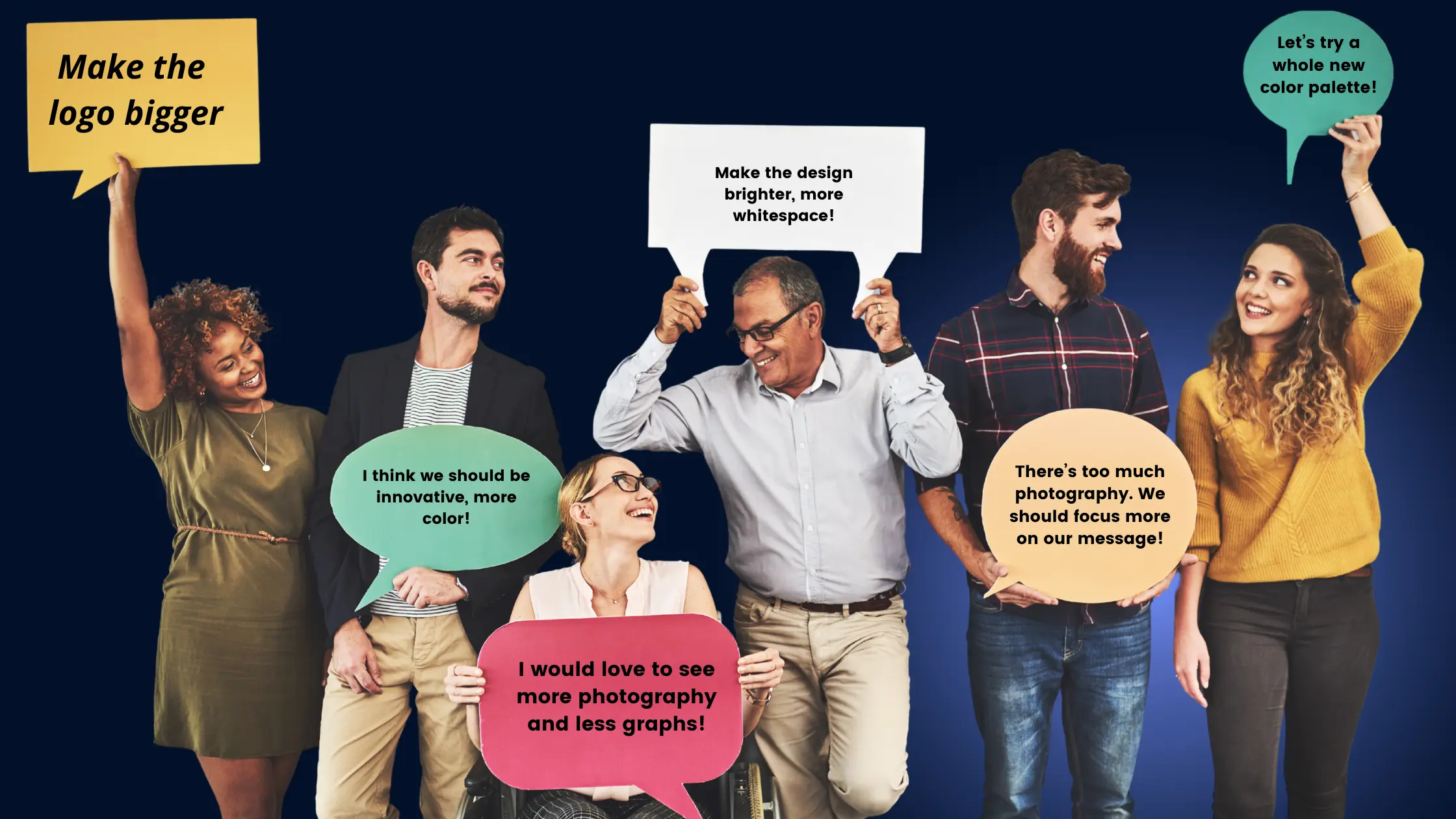
Design feedback is interesting when it comes from a board.
One person likes modern layouts. Another prefers something more traditional. One member wants larger photos. Another wants more information above the fold. One person loves a color palette while another wants to change it completely.
None of these opinions are necessarily wrong.
The challenge is that design isn’t created by committee.
When enough competing preferences get layered into a project, the original strategy can get diluted.
The best board-led organizations understand this balance.
They bring diverse perspectives into the conversation, then evaluate options based on audience needs instead of personal preference.
When that happens, the design process becomes much more productive.
Scheduling Gets More Complicated
This is probably the most practical challenge.
A business owner can often approve a website page with a quick phone call.
A board may need to review it during the next monthly meeting.
Then questions come back.
Then updates are made.
Then another review happens.
None of this is unusual and we have the project management skills to navigate it.
Projects involving boards almost always require more coordination and more patience from everyone involved.
At the same time, some of the most enjoyable meetings we’ve had happen during these projects.
There’s something rewarding about watching people collaborate around a shared mission. Everyone wants the organization to succeed. Everyone is trying to contribute something useful.
The process may take longer, but it often creates stronger buy-in once the project launches.
Nobody Really Has the Final Say
Until They Do
One challenge we see frequently is decision paralysis.
Everyone wants consensus. Nobody wants to overrule a colleague. The discussion keeps going because nobody feels comfortable making the final call.
This is where expertise becomes important.
When an organization hires a web designer, marketer, strategist, or branding professional, they’re bringing in someone whose job is to guide decisions.
That doesn’t mean ignoring board feedback.
It means helping the group understand which option is most likely to achieve the outcome they’re looking for.
The best board projects happen when stakeholders contribute their expertise and then trust specialists to contribute theirs.
A board knows the organization.
A marketing team knows how users behave online.
Both perspectives matter.
What Makes Board-Led Organizations Great to Work With
Despite the extra meetings, revisions, and coordination, we genuinely enjoy these projects.
The conversations tend to be thoughtful.
The missions are usually meaningful.
The people involved care deeply about the organization and the community it serves.
When a board reaches alignment around a website or marketing strategy, the result is often stronger than what any one person would have created alone.
Good collaboration isn’t always fast.
It rarely looks simple from the outside.
But when everyone brings their expertise to the table, listens to different perspectives, and stays focused on the audience they’re trying to serve, great things can happen.
That’s why we keep saying yes to board-led organizations.
Even when we know there are probably a few extra meetings on the calendar.