
Website Design & Digital Support
for Small Government in Montana
Helping counties, towns, special districts, and public utilities across Montana and neighboring states build websites that get residents to the right answer, and the right department, without a phone call.
- Montana Focused
- Free 30-Minute Session
- No Pressure, Just Clarity
Your Website Isn’t Just a Marketing Tool. It’s a First Impression.
If you run a county office, a town, a water district, or a public utility in Montana, you already know the pattern.
The answer is on the website. People call anyway.
The other day, we were working with a clerk’s office where the same three questions came through the front counter every single day.
“Where do I get this form. Who do I talk to about that. When is the next meeting.”
All three answers were online, each of them three clicks deep, in three different places, added by three different people over the years.
That is the situation most small government websites are in. The site grew one notice and one PDF at a time, and nobody ever stepped back to ask how a resident would move through it.

A business website has one job: turn a visitor into a customer.
A government website has a harder one: take a resident with a question and get them to the answer, or the person who has it, as quickly as possible.
When that works, the counter is quieter and people trust the office more. When it doesn’t, the burden lands on your staff.
Why Most Small Government Websites Are Hard to Use
In most of the public sector sites we review, the information is there. Residents just can’t find it, or they find it and still don’t know who to contact.
Here’s what that looks like in real situations:
A rancher needs a burn permit. The form is a scanned PDF on a page called “Documents.” He calls the sheriff’s office instead, and they transfer him twice.
A resident wants to speak at a public hearing. The notice is a JPEG of a flyer. She can’t search it, can’t read it on her phone, and her screen reader can’t read it at all.
A new homeowner wants to start electric service. The website has one contact form that lands in one inbox, and someone has to forward it to the right department the next morning.
In each case the office published the information. The path to it is what failed.
And adding more content to a site like this doesn’t help. It just adds another layer.
Public Sector Websites for Montana Hospitality
First Call Digital is a Missoula, Montana web design and digital agency that builds, maintains, and secures websites for counties, towns, special districts, public utilities, regulatory boards, and associations across Montana and neighboring states. Each of the sites below had the same underlying challenge: a large amount of important information, several departments or programs, and a public that needs to find the right page fast.

Websites that let someone on their phone at 9pm find what they need and book in under a minute through web design and development built for conversion

Local visibility that shows up when someone searches “places to stay near [your town] tonight” through local SEO for Montana businesses

Clean integrations with the systems you already use without creating extra friction

Campaigns tied to real demand like events, weddings, and off-season offers using a clear marketing strategy framework
A county government site organized around two questions residents actually ask: “How do I?” and “Which department do I need?” Twenty-plus departments, a forms hub, a staff directory, and public notices, all reachable from the homepage.
A public electric utility serving the Flathead Reservation. The site puts the four things customers need most on the homepage: outage center, start or stop service, service forms, and payment. Separate phone lines and contact paths for billing, engineering, and after-hours emergencies send people to the correct desk on the first try.
Association of Montana Floodplain Managers
A professional association with an education mission: helping planners, developers, and the public understand floodplain management. Resources, certification information, an annual conference, and membership all organized so a first-time visitor knows where to start.
Flathead Reservation Water Management Board
A regulatory body created by the CSKT and Montana water rights compact. The site has to explain a complex legal framework, publish meeting notices and application records, and make it clear what the Board does and does not handle. A “What We Don’t Do” section, a forms and applications hub, and a public calendar do that work.
See more of our work in the First Call Digital portfolio.
See Where Residents Get Stuck on Your Site
This is a working session, not a sales call.
In 30 minutes we’ll walk through your current site together and look at:
- Whether a resident can get from the homepage to the right form or department in two clicks
- Where contact requests are landing, and whether they're reaching the right person
- What the site looks like on a phone, which is how most residents will use it
- How far you are from the ADA Title II accessibility deadline that applies to your entity
- What's worth fixing first, and what can wait
You’ll leave with a clear picture of where things stand. Sometimes we’re a fit to help. Sometimes we’re not. Either way, you’ll know what to do next.


Government Website Services: What We Help With
Public sector organizations need a partner who can make a complex body of information usable, keep it running, and keep it safe. That covers eight things.
Reach the people you serve
Residents, ratepayers, applicants, and visitors find your site when they search for the service, the form, or the office in the words they use, which are rarely the words on the org chart.

Direct traffic to the right department
Task-based navigation, department pages, and routed contact forms so a question about a water bill never lands in the road department's inbox.

Ensure high-quality user interactions
Forms that work on a phone, notices that can be read and searched, and pages that answer the question before someone has to call.

Recommend improvements
We review how the site is being used and tell you what to change, in order of impact, with the reasoning.
Report on outcomes
Readable reporting on what residents searched for, which forms were downloaded, where contact requests went, and where people gave up.
Maintain the site
Updates, plugin and platform maintenance, content changes, and support when a notice needs to go up today.

Keep it secure
Hosting, backups, monitoring, SSL, and security updates handled on a schedule, so a public site stays a public site.

Train your team
Your staff can post a meeting notice, update a form, or change office hours without waiting on a developer.
Organizing Layers of Education So People Can Actually Use Them
Government, utilities, regulatory boards, and nonprofits share a problem that most businesses never face. You have a large amount of information the public needs to understand, and it comes in layers: what the office does, what it doesn’t do, which rules apply, which form to use, what happens next, and when the next meeting is.
Most sites organize all of that around the org chart. Residents arrive with a task, and the org chart is the last thing on their mind.
So we start by asking a different question: what are the twenty things people come here to do?
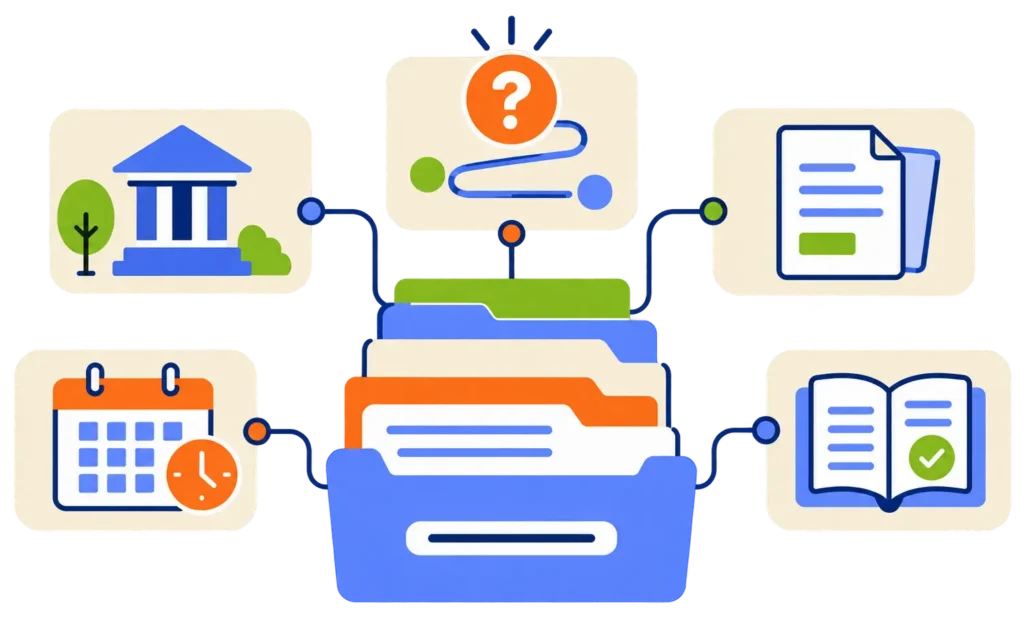
Then we build the site around those. That usually means:
- A “How do I?” path on the homepage, built from the questions your front counter hears most
- Department and program pages that each answer the same four things: what we do, what we don't do, which forms you need, and who to contact
- A single forms hub instead of PDFs scattered across a dozen pages
- Meetings, notices, and agendas in one calendar that can be searched and read on a phone
- Plain-language explanations of the rules and processes, with the legal documents linked underneath for people who need them
When a regulatory board publishes a “What We Don’t Do” section, it saves as many calls as the “What We Do” section. Getting that layer written clearly is where our content planning and writing support does the most good for public sector clients.
Contact Forms That Reach the Right Department
On most small government sites, “Contact Us” is one form, one email address, and one phone number. Everything goes into the same inbox, and a person has to sort it.
For an office with five or twenty-five departments, that creates a daily pile of forwarding, a slow response for the resident, and no record of which department generates the most requests.
We build contact direction into the structure of the site:
- Contact forms per department or service, each delivered to that department's inbox
- Department pages that show that office's phone number, hours, and location, so nobody has to hunt for a directory
- A clear after-hours or emergency path where one exists, separated from routine contact
- Confirmation messages that tell the resident what happens next and how long it usually takes
- Simple tracking so you can see how many requests each department receives and respond accordingly
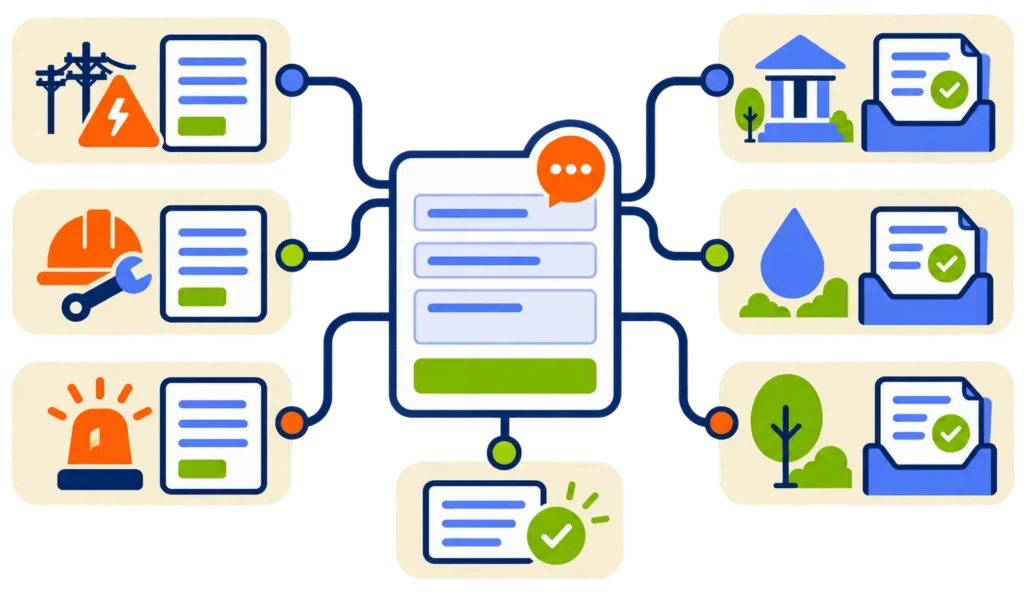
A utility customer reporting an outage and a contractor asking about a new service connection belong in different queues.
On the sites we build, they are.
ADA Compliant Government Websites: The Title II Deadline
Under Title II of the Americans with Disabilities Act, state and local government websites, mobile apps, and the documents they publish must meet the WCAG 2.1 Level AA accessibility standard.
The compliance dates are set:
- April 26, 2027 for public entities serving a population of 50,000 or more
- April 26, 2028 for public entities under 50,000 and all special district governments
That second date covers most counties, towns, water and sewer districts, fire districts, conservation districts, and public utilities in Montana and neighboring states. The rule applies whether you have a full IT department or one part-time administrator.
The rule covers more than the pages.
Scanned PDFs, meeting minutes, agendas, forms, embedded maps, and third-party tools like payment portals all count. A notice posted as an image of a flyer fails the standard.
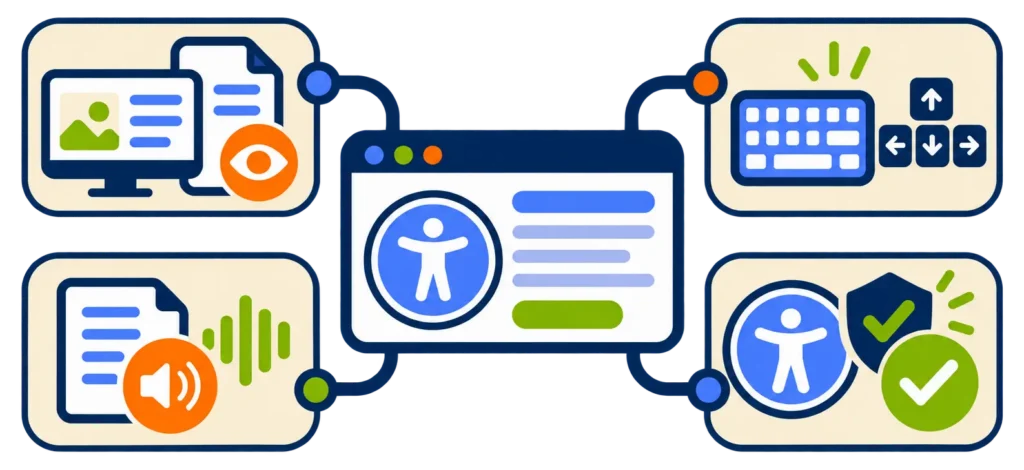
We build new sites to WCAG 2.1 AA from the start and audit existing ones against it, with a list of what passes, what fails, and what to fix in what order. Accessibility built in from the start is also good design: readable on a phone, navigable by keyboard, and usable by everyone.
Official guidance from the Department of Justice: ADA.gov, first steps toward complying with the web rule.
Government Website Hosting, Security, and Maintenance
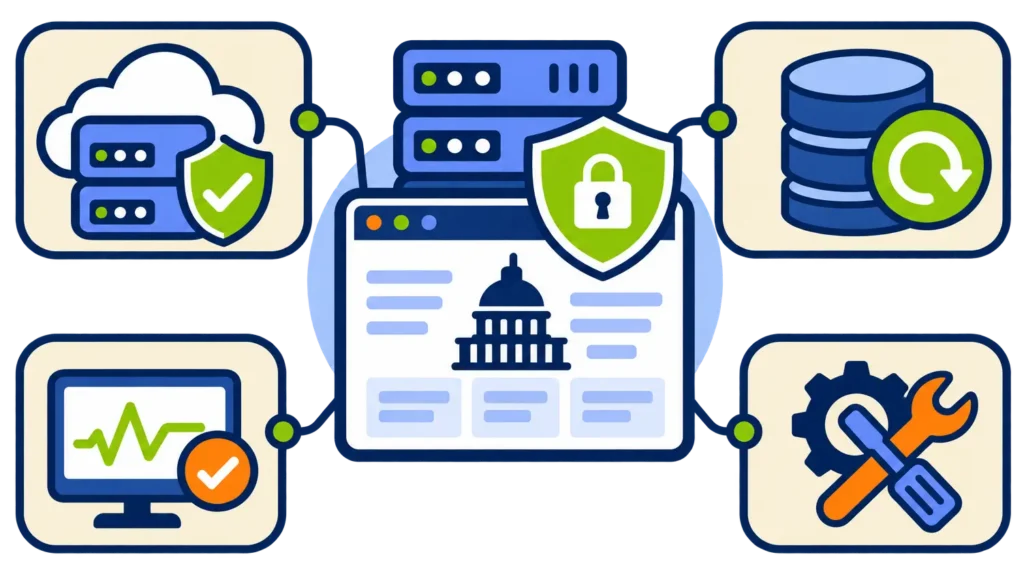
A government website is a public record, a service counter, and in some cases a payment channel. It has to stay online, stay current, and stay safe.
Even well-run sites are scanned and probed constantly. On one site we monitor, more than a thousand automated login attempts were blocked in a single day. When hosting and updates are handled properly, that never becomes your problem. When they aren’t, it does.
Our hosting and maintenance for public sector clients covers:
- Managed hosting with SSL, daily backups, and uptime monitoring
- Platform, theme, and plugin updates applied on a schedule and tested
- Secure handling of forms that collect personal information
- A support desk for content changes, urgent notices, and questions
- A record of what was changed and when, which matters when the public asks
A utility customer reporting an outage and a contractor asking about a new service connection belong in different queues.
On the sites we build, they are.
You can read more about how we support sites over time on our website hosting and maintenance page.
First Call Digital grew out of a Montana IT company that has supported cities and counties for more than 25 years. If your office also needs help with the network, devices, and cybersecurity behind the website, First Call’s IT services for cities and counties cover that, and the two teams already work together.
Reporting That Tells You Whether Residents Found What They Needed
Leads and sales are the wrong measure for a county or a utility.
So we report on the things that describe whether the site is doing its job:
- What people searched for on the site, including the searches that returned nothing
- Which forms were downloaded or submitted, and how often
- How many contact requests went to each department
- Which pages residents leave from quickly, which usually means they didn't find the answer
- How much of your traffic is on a phone, and how those visitors behave differently
So we start by asking a different question: what are the twenty things people come here to do?
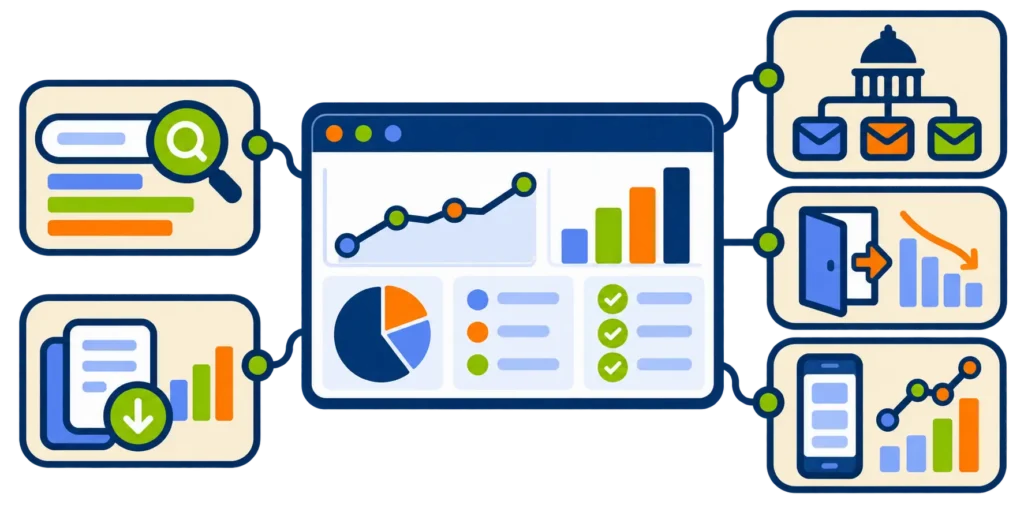
Each report comes with recommendations written in plain English. If the burn permit form was searched for 400 times last month and downloaded 60 times, something is in the way, and we’ll tell you what to change.
It’s also useful when you have to explain a website line item to commissioners, a board, or the public. You’ll have numbers that describe service to residents.
Training Your Team So the Site Doesn't Depend on One Person
In a lot of small offices, one person knows how the website works. When that person retires, moves on, or is out for two weeks, notices stop going up.
We build sites your staff can manage and then we teach them how. That means:
- Training sessions for the people who will post notices, update forms, and change hours
- Written documentation for your site, covering the tasks your staff do
- Templates for the things you publish most, so a meeting agenda always looks the same and always ends up in the right place
- Refresher training when staff change, included in ongoing support
- A record of what was changed and when, which matters when the public asks
Nobody in your office should have to wait on a developer to tell the public that the courthouse is closed on Friday.
Who This Is For
This is a good fit if you are:
- A healthcare A county, city, or town government in Montana or a neighboring state or clinic in Montana
- A special district: water, sewer, fire, conservation, cemetery, mosquito, irrigation, or similar
- A public or cooperative utility
- A regulatory board, commission, or tribal program with a public information role
- A nonprofit or professional association whose main job online is to educate
- Facing the ADA Title II accessibility deadline and not sure where your site stands
- Fielding daily calls the website should already be answering
This may not be a fit if:
- You’re primarily looking to generate leads or sales. Our digital marketing services are built for that, and we’d point you there instead
- You need a one-time build with no plan to keep it current or accessible


We work with organizations across Montana and into Idaho, Wyoming, North Dakota, and South Dakota. If you’re not sure whether we’re a fit, ask. We’ll tell you.
Working Within Public Procurement and Budget Cycles
We understand that a public entity can’t just sign up. You may need a written quote for a board meeting, a formal proposal for an RFP, references from other public clients, or a start date that lines up with a fiscal year.
We’ve done all of that. We’ll give you a scope, a cost, and a timeline you can put in front of commissioners or a board, and we’re glad to talk to whoever needs to hear it directly.
Our process is the same for every client, whether the project is a rebuild, a fix to what you already have, or ongoing support for a site that’s mostly working.

Let's Look at Where Residents Get Stuck
Your website should answer the question before anyone has to call, send people to the department that can help, and stay accessible and secure without becoming another job for your staff.
If you want to know how close your current site is to that, we can walk through it with you in 30 minutes.
Book a free session and leave knowing exactly what to fix first, what can wait, and where your accessibility gaps are.
- No sales pitch.
- No marketing jargon.
- No prep required.

Frequently Asked Questions
Do you build websites for small counties and towns in Montana?
Yes. We’ve built and maintain sites for Montana counties, public utilities, regulatory boards, and associations, including Blaine County and Mission Valley Power. Population size isn’t a barrier. Small offices often benefit most, because a well-organized site takes pressure off a small staff.
What is the ADA Title II website deadline for local governments?
Public entities serving 50,000 or more people must meet WCAG 2.1 Level AA by April 26, 2027. Entities under 50,000 and all special districts must comply by April 26, 2028. The rule covers websites, mobile apps, and published documents such as PDFs and forms. We can audit your current site against the standard and build new sites to meet it.
Can you fix our existing site, or do we have to start over?
Often we can improve what you have. If the platform is sound, we’ll restructure navigation, rebuild the forms and contact routing, fix accessibility issues, and set up maintenance. If the site is built on something that can’t be secured or made accessible, we’ll say so and explain why a rebuild is the better use of public money.
How do you route contact requests to the right department?
Each department or service gets its own form or contact path, with submissions delivered to that department and a confirmation to the resident. Department pages carry the direct phone number, hours, and location. Where an after-hours or emergency path exists, it’s separated from routine contact so urgent requests aren’t waiting in a general queue.
Can our staff update the site themselves?
Yes, and that’s the goal. We build on a content management system your team can use, train the people who will be posting notices and updating forms, and provide documentation written for your site. Ongoing support is there for anything beyond that.
What does website hosting and maintenance include?
Managed hosting, SSL, daily backups, uptime monitoring, scheduled platform and plugin updates, security patching, and a support desk for changes. Details are on our hosting and maintenance page.
Can you work with our procurement process or respond to an RFP?
Yes. We regularly provide written quotes for board approval, formal proposals for RFPs, and references from other public sector clients. We can also time a project start to your fiscal year.
Do you work outside Montana?
Yes. Most of our public sector clients are in Montana, and we also work with organizations in Idaho, Wyoming, North Dakota, and South Dakota. The accessibility rule, the procurement realities, and the challenge of organizing public information are the same across the region.