

Social media trends can help a business join timely conversations, reach new people, and learn what its audience cares about. But a trend only helps when it fits your audience and your goals. Chasing every viral moment can make a brand look like it arrived at the party after everyone had already gone home.
There’s a real opportunity here: DataReportal estimated 5.24 billion social media user identities worldwide in January 2025, up 4.1% over the previous year. It also reported that half of adult social media users visit platforms to learn about brands and the products or services they offer. Those figures show the potential reach of social media, but they don’t mean every platform or trend will work for every business. DataReportal – Global Digital Insights
How Social Media Feeds Work
Social platforms use recommendation systems to decide what to show each person. They consider factors such as the topic and format of a post, how someone has interacted with similar content, and whether the post seems relevant to that person.
The details vary by platform and change over time. LinkedIn uses information about the post, its recency, and members’ professional interests and activity. YouTube recommendations reflect what viewers choose to watch and how they respond. TikTok considers user interactions, content information, and user settings. There’s no single formula for getting more reach. The practical takeaway is to create useful content for a specific audience, then learn from how that audience responds. www.linkedin.com
Find Trends That Fit Your Business
Look for topics and formats showing up in the conversations your customers already follow. You can:
- Monitor industry news, customer questions, relevant creators, and professional communities.
- Review your analytics to see which of your posts earn meaningful attention.
- Notice which subjects prompt thoughtful comments, shares, saves, or follow-up questions.
- Track common concerns among customers, prospects, and employees.
A competitor’s popular post can be a clue about what people are discussing. It doesn’t prove the topic is right for your business. Investigate the conversation, then bring your own experience and point of view.
A 2025 Sprout Social survey found that 93% of consumers think it’s important for brands to keep up with online culture, but one-third said jumping on viral trends can be embarrassing for brands. That’s a useful reminder: relevance matters, but forced participation can backfire. investors.sproutsocial.com
Adapt Trends to Your Brand
Before using a trend, ask:
- Does this topic connect to our customers, services, or industry?
- Can we add a useful perspective, example, or explanation?
- Is the tone appropriate for our brand and this conversation?
- Will the post make sense to someone who hasn’t seen the trend?
For a B2B company, that could mean explaining how an industry change affects customers, answering a common question in a short video, or sharing a practical lesson from a project. The trend can help with timing or format; your expertise should shape the message.
Create for the Platform and the Audience
The same idea may need a different treatment on each platform. A detailed professional insight may suit LinkedIn. A quick demonstration could work as a short video. A longer, searchable explanation may belong on YouTube.
Choose the format based on the message and how your audience uses the platform. Make the opening clear, keep the content focused, and offer a next step when it helps. Invite genuine responses with a relevant question or a request to share experience. Avoid asking for comments just to inflate engagement. Your audience can tell when a conversation is real—and when the post is fishing for “YES” comments like it’s 2017.
Measure What Helps Your Business
Views and likes can show that people noticed a post, but they don’t tell the whole story. Track results connected to your goals, such as:
- Relevant comments and conversations
- Shares, saves, or video completion
- Visits to important pages
- Inquiries, registrations, or other conversions
Compare similar posts over time. Look for patterns by topic, format, and audience. If a trend earns attention but little meaningful engagement or action, it may not be worth repeating.
A Social Media Checkup You Can Do Today
- Choose one business goal. For example: increase awareness in a service area, answer a common customer question, or generate inquiries for one service.
- Review your last 10 posts. Note the topics and formats that led to relevant comments, page visits, or inquiries.
- List three questions customers ask often. Turn one into a post, short video, or simple graphic.
- Check one trend against your brand. Use it only if you can connect it naturally to your audience and add something useful.
- Pick one measure of success. Track it for the next few posts, then adjust based on what happens.
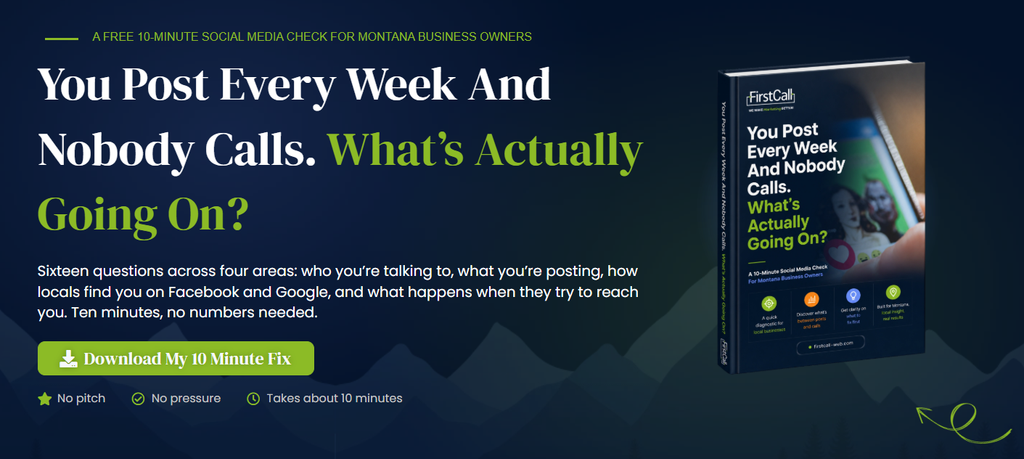
Download our 10-Minute Social Media Fix for more tips.
Make the Strategy Fit the Business
Social media strategy depends on several factors: location, competition, industry, seasonality, budget, audience, and available staff time. A seasonal tourism business in a small market may need a different schedule and platform mix than a regional professional services firm. A useful strategy accounts for those differences before setting posting goals or choosing trends to follow.
Social media trends can support visibility when they connect your experience with a conversation your audience already cares about. Use the numbers as context, your analytics as evidence, and your judgment to decide what fits.